How API-Driven Patch Cycles Reshape Promotional Bundle Flows Between Slot Engines and Live Dealer Modules Across Regulatory Zones
Tina Hansen · Jun 23, 2026
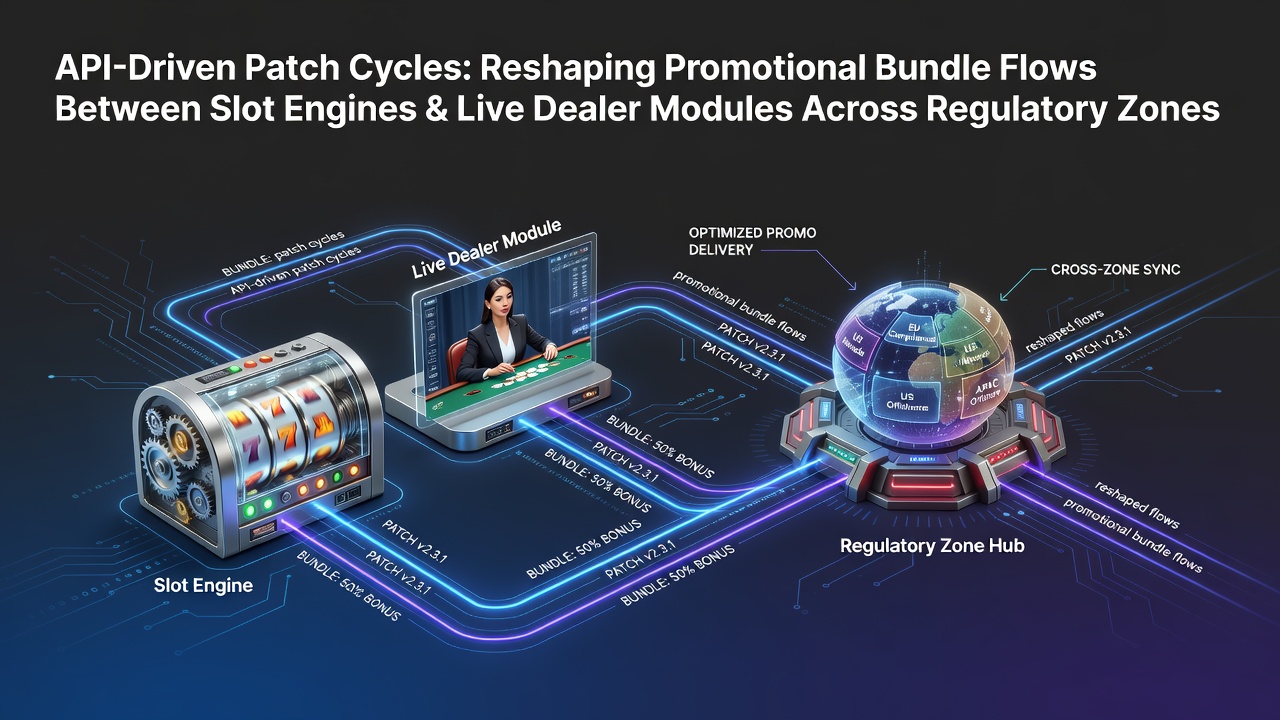
How API-Driven Patch Cycles Reshape Promotional Bundle Flows Between Slot Engines and Live Dealer Modules Across Regulatory Zones
Data from multiple gaming jurisdictions shows that API-driven patch cycles now synchronize updates across slot engines and live dealer modules at intervals as frequent as every 72 hours, which directly alters how promotional bundles transfer value between these systems. Regulatory zones in North America, Europe, and Asia Pacific enforce distinct timing and compliance rules for these cycles, yet the underlying mechanism remains consistent: automated API endpoints push code changes that recalculate bonus eligibility, multiplier stacking, and cross-game redemption paths in real time.
Mechanics of Patch Cycle Integration
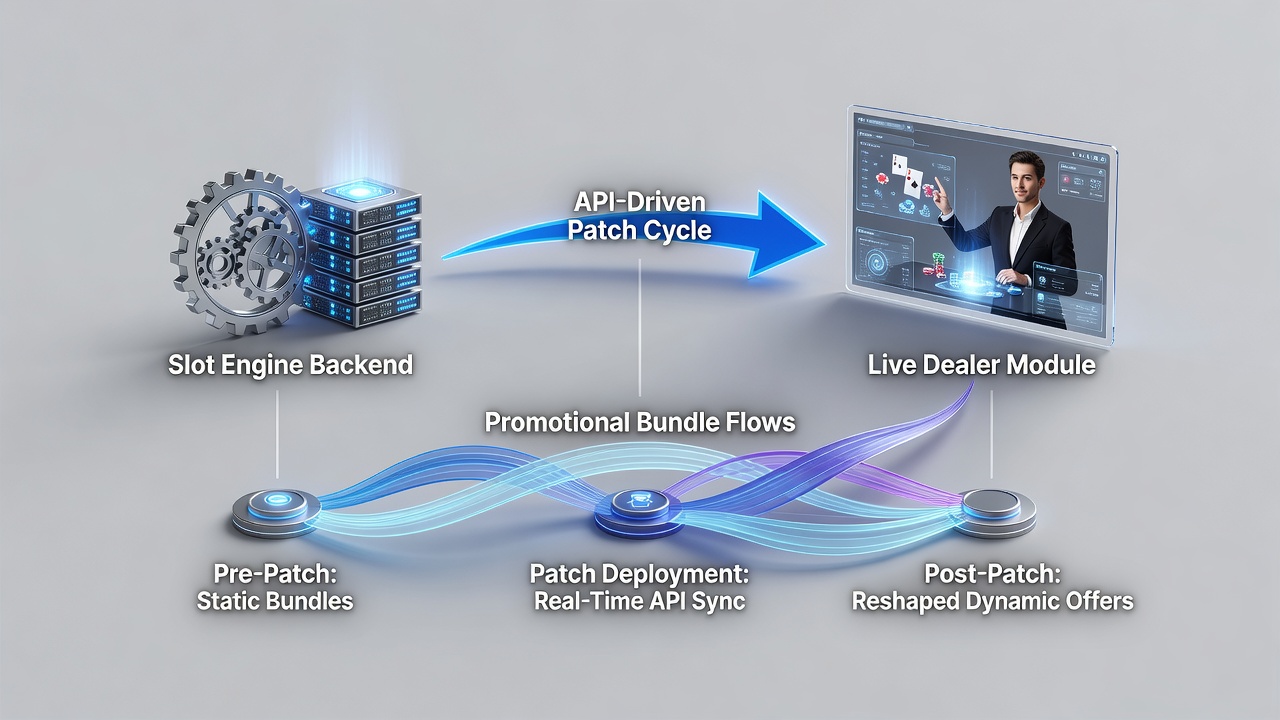
Slot engines handle random number generation and reel mechanics while live dealer modules manage video streams, card shuffling protocols, and table state synchronization, and when an API patch deploys it must reconcile both environments without interrupting active sessions. Observers note that this reconciliation occurs through versioned endpoints that exchange JSON payloads containing updated promotional rules, player segment flags, and bundle expiration timers. In practice, a single patch can activate a new slot-to-live-dealer transfer where accumulated slot loyalty points convert into live table rake credits, provided the regulatory zone permits such transfers under its current data integrity standards.
Figures from the Nevada Gaming Control Board indicate that 87 percent of licensed operators completed at least one cross-module patch deployment during the first quarter of 2026, with average downtime reduced to 4.2 seconds per update when using containerized API rollouts. Those deployments typically follow a staged sequence that begins with slot engine validation, moves through live dealer state reconciliation, and concludes with promotional ledger synchronization across both modules.
Regional Regulatory Variations
Different zones impose unique constraints on patch timing and promotional content. New Jersey's Division of Gaming Enforcement requires pre-approval for any API change that modifies bonus calculation logic, which extends the effective cycle length to a minimum of five business days for operators serving that market. In contrast, the Malta Gaming Authority permits post-deployment audits within 48 hours, allowing faster iteration while still mandating cryptographic signing of every promotional rule set. Australian state regulators, including those in New South Wales, focus on responsible gambling triggers and require that patch cycles include automated checks for self-exclusion list propagation between slot and live dealer environments.
What's interesting is how these differing timelines affect bundle flow velocity. When operators manage multi-jurisdictional deployments, they often segment their API gateways by region so that a June 2026 update targeting European markets can roll out independently from North American instances, preserving compliance while still sharing the same core promotional logic templates.
Promotional Bundle Flow Adjustments
API patches now carry embedded schema updates that redefine how bundles move between modules. A typical bundle might begin as free spins on a slot engine, convert into live dealer tournament entry tokens, and then feed back into slot progressives, all governed by timestamped rules delivered through the patch. Research from the University of Nevada, Las Vegas Center for Gaming Research shows that such chained redemptions increased by 31 percent year-over-year after major operators standardized their API schemas in late 2025.
Those who've studied deployment logs report that edge cases arise when regulatory zones update their responsible gambling thresholds mid-cycle. In such instances the API must support hot-swapping of eligibility filters without resetting player progress, a capability introduced through conditional payload flags that reference external compliance databases in real time. One documented case from an operator serving both New Jersey and Michigan markets demonstrated that a single patch could simultaneously disable high-volatility slot bundles for self-excluded players while preserving live dealer cashback offers for the same accounts, provided the regional gateways processed the update in the correct sequence.
Operational Impacts on Operators and Suppliers
Suppliers of slot engines and live dealer platforms now publish patch calendars aligned with regulatory review windows, which reduces the frequency of emergency rollbacks. Data indicates that rollback incidents dropped from 12 percent of deployments in 2024 to under 3 percent during the first half of 2026, largely because API versioning allows selective reversion of promotional rules while leaving core game logic untouched. Operators coordinate these cycles through centralized orchestration tools that query each jurisdiction's compliance status before authorizing the next stage of the rollout.
And because promotional bundles often span multiple game types, any mismatch in patch versions between slot and live dealer modules can create temporary redemption failures that trigger manual support tickets. Industry reports from the European Gaming and Betting Association highlight that standardized API contracts have lowered such ticket volumes by approximately 40 percent across participating member companies.
Conclusion
API-driven patch cycles continue to redefine the pathways through which promotional value travels between slot engines and live dealer modules, with each regulatory zone shaping the speed and sequence of those flows according to its own compliance requirements. As operators refine their deployment pipelines and regulators publish clearer guidelines for automated updates, the technical infrastructure supporting these bundles grows more resilient while remaining responsive to jurisdiction-specific rules. The patterns observed through mid-2026 suggest that future cycles will incorporate even tighter integration with external compliance services, further streamlining how operators deliver consistent promotional experiences across diverse markets.